10 Kitchen Food Safety Rules for Home Cooks
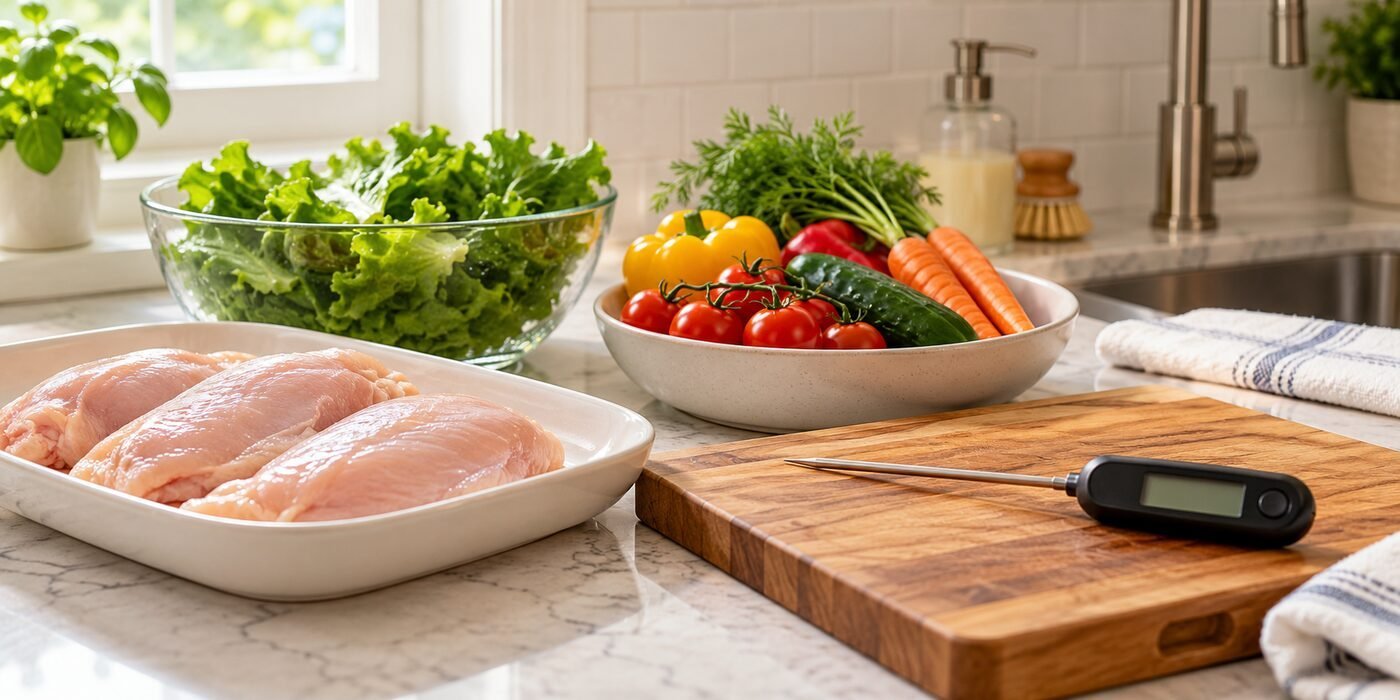
Everyday habits that make food handling safer
Quick answer: Wash hands with soap and water for 20 seconds, keep raw meat separate from ready-to-eat food, use a food thermometer for cooking, refrigerate perishables within 2 hours (within 1 hour above 90°F), and keep the refrigerator at or below 40°F. For official temperature and leftover guidance, see the USDA safe temperature chart and leftover safety guide.
Food safety slips can happen when raw juices reach ready-to-eat foods, leftovers stay warm too long, or food is not cooked to a safe temperature. Consistent habits make these risks easier to manage. Here are ten practical steps for separating, cooking, cooling, and storing food at home.
Rules 1–2: Separate raw from ready-to-eat
Rule 1 — Keep raw foods separate. Use separate cutting boards and plates for raw meat, poultry, seafood, and ready-to-eat foods such as salad or bread. If you use one board, wash it with hot, soapy water before switching from raw food to produce or cooked food. Keep raw juices away from foods that will not be cooked.
Rule 2 — Bag raw meat separately and store it below ready-to-eat food. Keep raw meat, poultry, and seafood in sealed packaging or a leakproof container on a lower refrigerator shelf so juices cannot drip onto foods that will be eaten without further cooking. At the store, place raw packages in a separate bag when available.
Rules 3–4: Temperature is truth
Rule 3 — Use a food thermometer; appearance alone cannot confirm safety. Meat can change color before it reaches a safe internal temperature, and color is not a reliable doneness test. Insert the thermometer into the thickest part, away from bone, fat, or gristle. Check thin foods from the side, and check more than one spot in large or irregular pieces. Keep these USDA minimum temperatures close:
| Food | Safe minimum |
|---|---|
| Poultry, including ground poultry | 165°F |
| Ground beef, pork, lamb, and veal | 160°F |
| Whole cuts of beef, pork, lamb, and veal | 145°F, then rest 3 minutes |
| Fish and shellfish | 145°F |
For poultry, check the thickest part of the breast and the innermost part of the thigh, avoiding bone. For thin patties or fillets, insert an instant-read thermometer sideways so the sensing area reaches the center. Wash the thermometer probe with hot, soapy water before and after each use, especially when it touches undercooked food. Follow the thermometer maker’s directions for how deeply to insert it and how long to wait for a reading. For more temperature references and steak doneness guidance, see our meat internal temperature chart. For a practical poultry example, use the steps in our air fryer chicken breast guide.
Rule 4 — Check leftovers after reheating. Reheat leftovers to 165°F throughout. In a microwave, cover the food, stir or rotate it during heating, and let it stand briefly before checking the temperature in several spots with a food thermometer. This helps find cold areas that a single edge reading can miss.
Rules 5–6: Respect the danger zone
Rule 5 — Follow the two-hour rule. USDA advises refrigerating perishable food within 2 hours, or within 1 hour when the temperature is above 90°F. Keep cold foods at 40°F or below and hot foods at 140°F or above when serving. For a buffet or picnic, use ice to keep cold dishes chilled and a heat source to keep hot dishes hot; otherwise, put perishables away before the time limit.
Rule 6 — Divide leftovers into shallow containers. Refrigerate perishable leftovers within 2 hours (within 1 hour when the temperature is above 90°F). For large batches such as soup, split the food into shallow containers so it cools more quickly in the refrigerator. Do not leave food out overnight to cool.
Rules 7–8: Wash right (which is mostly wash less)
Rule 7 — Wash your hands with soap and water. Scrub for at least 20 seconds before preparing food and after handling raw meat, poultry, seafood, eggs, or unwashed produce. Wash again after using the bathroom, touching garbage, or cleaning. Dry with a clean towel.
Rule 8 — Rinse produce; do not rinse raw poultry. Wash fruits and vegetables under clean running water before cutting or eating, including produce you plan to peel. Do not use soap or detergent on food. Keep raw poultry away from ready-to-eat foods, and cook it to 165°F as measured with a food thermometer. Rinsing raw poultry can spread germs around the sink and nearby surfaces; cooking to a safe temperature is what makes it safe to eat. See the CDC food safety guidance.
Rules 9–10: Fridge discipline
Rule 9 — Keep the refrigerator at 40°F or below. Use an appliance thermometer to check the actual temperature instead of relying only on the control setting. Store raw meat below ready-to-eat food to help prevent drips from reaching it. Divide hot leftovers into shallow containers and refrigerate them promptly.
Rule 10 — Use leftovers within 3–4 days. Keep cooked leftovers refrigerated for 3–4 days or freeze them for longer storage. Label containers with the date, and reheat leftovers to 165°F. Do not rely on smell or appearance to decide whether food is safe; when food has been stored too long or you are unsure how it was handled, discard it. See the USDA leftovers and food safety guide for storage and reheating advice.
A note on marinating safely
Marinades are flavor delivery systems and contamination risks in equal measure. Always marinate in the refrigerator, never on the counter — the danger zone applies before cooking too. Using a glass or food-grade plastic container rather than a metal bowl avoids reactions with acidic marinades. And if you want to use some of the marinade as a serving sauce, reserve a portion before the raw meat goes in, or boil the used portion hard for several minutes; brushing raw-marinade onto cooked food reconnects the contamination loop this whole article exists to break.
Defrosting without the gamble
Thaw food in the refrigerator when you can. For a faster method, place it in a leakproof bag under cold water and change the water every 30 minutes; cook it as soon as it thaws. If you use the microwave to defrost, cook the food immediately afterward. Food thawed in the refrigerator can be refrozen without cooking, though quality may decline; food thawed by cold water or microwave should be cooked before refreezing. Do not thaw perishable food on the counter.
Clean surfaces before switching tasks
After raw meat, poultry, seafood, or eggs touch a board, knife, plate, or counter, wash the item with hot, soapy water before using it for cooked food or produce. Clean spills promptly, including raw juices in the sink. If you use a sanitizer on food-contact surfaces, follow its label directions for dilution, contact time, and whether the surface needs rinsing. Keep a separate clean plate ready for cooked food; never put cooked food back on a plate that held it raw.
The weekly five-minute reset
A short weekly check can catch storage problems before they turn into waste. Use an appliance thermometer to check that the refrigerator stays at 40°F or below and the freezer is at 0°F. Move older, safely stored items to the front, date containers of cooked leftovers, and plan to use or freeze them within 3–4 days. Then check for spills that need cleaning and cloths that need laundering.
- Check the fridge and freezer thermometers.
- Wipe door handles and drawer pulls with soapy water.
- Toss anything past its date — first-in, first-out rotation makes this rare.
- Wash reusable cloths regularly, and replace worn or hard-to-clean sponges; clean and sanitize food-contact surfaces after raw foods.
- Glance at the cutting boards; deep knife grooves deserve replacement.
Five minutes, once a week, and the ten rules become background behavior instead of a checklist.
Frequently asked questions
Why do whole cuts of meat need a three-minute rest?
For whole cuts of beef, pork, lamb, and veal, the USDA safe minimum is 145°F followed by a three-minute rest before eating. The rest is part of the recommended safe handling guidance for those cuts. Ground meats and poultry use different minimum temperatures, so follow the chart rather than applying the rest rule to every food.
Sponge or dishcloth?
Kitchen sponges can be difficult to clean. USDA says microwaving or boiling may reduce some bacteria, but those methods alone cannot ensure a sponge prevents cross-contamination. Wash food-contact surfaces and utensils with hot, soapy water after preparing raw foods, and replace sponges frequently. Do not use a sponge as a substitute for cleaning counters or cutting boards.
Is the pink juice in beef blood?
No — it’s myoglobin mixed with water, a muscle protein, not blood. Its presence says nothing about doneness. A safely rested steak can run pink juices; a ground beef patty at 158°F can run clear. Only the thermometer knows.
Can I refreeze thawed meat?
Meat thawed in the refrigerator can be refrozen without cooking, though quality may decline. If it was thawed in cold water or a microwave, cook it before refreezing. Do not refreeze food left at room temperature beyond the safe time limit; discard perishables left out over 2 hours (or over 1 hour above 90°F).
How long do eggs really last?
Keep eggs refrigerated in their original carton. FDA recommends using them within 3 weeks for best quality, and using hard-cooked eggs within 1 week. Do not use a float test to decide whether an egg is safe. For more details, see the FDA egg safety guidance.
None of these rules require gadgets or courage — just repetition until they’re reflexes. Your future self, and everyone who eats at your table, quietly benefits.
This article was prepared with AI assistance. Check official food-safety guidance for current recommendations.